Choosing the right Cabinet Door Shocks in 2026 requires more than matching a product photo. A shock must control movement without making the door feel heavy or sluggish. Cabinet size, door weight, hinge position, opening angle, and daily usage all matter. A compact bathroom door needs different support from a wide, solid-wood kitchen door.
Real-world testing remains important. Open and close the door repeatedly. Listen for clicking, rubbing, or sudden impact. Check whether the shock holds the door smoothly at the intended angle. A model rated for a specific weight range may still perform poorly when installed too close to the hinge. Small placement changes can affect leverage.
Material quality also deserves attention. Reinforced plastic can suit light cabinets, while metal-bodied units may better handle frequent use. Damp kitchens and humid laundry areas require corrosion-resistant finishes. Always compare manufacturer specifications, installation guidance, and warranty terms. Independent reviews can help, but they should not replace careful measurement.
There is no universal best choice.
Some recommendations online sound overly certain. That is a weakness. Door behavior depends on construction details that product listings often omit. A careful buyer should measure first, test the fit, and allow room for adjustment. This guide examines practical selection methods for 2026, including load ratings, mounting styles, soft-closing performance, durability, and installation errors. The goal is dependable cabinet movement, not simply the cheapest or strongest component.
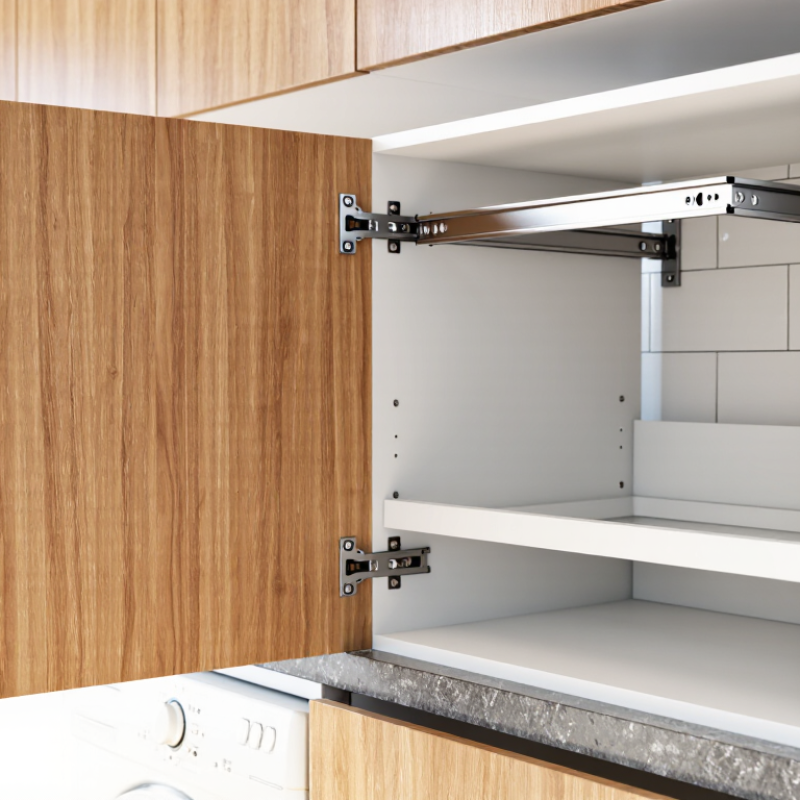
Cabinet door shocks are compact hardware devices that control how a door moves. They reduce sudden closing, vibration, and impact against the cabinet frame. Some models use hydraulic fluid, while others use pneumatic pressure, springs, or friction. The exact mechanism matters during selection.
A hydraulic shock contains a small piston inside a sealed cylinder. As the door closes, the piston pushes fluid through narrow passages. This restricted flow creates resistance and slows the final movement. Pneumatic versions use compressed gas to support or restrain the door. Their force may change with temperature, door angle, and repeated use.
In practical cabinet fitting, I check the door’s weight, width, hinge layout, and opening angle. A heavy solid-wood door needs stronger control than a thin composite panel. Too much resistance can make the door feel stiff. Too little resistance still allows a sharp impact. That balance is easy to underestimate.
Installation position also affects performance. A shock mounted too close to the hinge may provide limited leverage. Mounted farther away, it usually controls movement more effectively, but it may require stronger fixing points. Screws must sit firmly in suitable cabinet material. Loose mounting can create noise and uneven motion.
I have found that product labels are not always precise. Some “shocks” mainly slow closing, while others also assist lifting. Check the force rating, cycle testing, adjustment range, and temperature guidance. A quiet closing test with the actual door installed reveals more than a specification sheet alone.

How to Choose Cabinet Door Shocks in 2026?
Start with the door’s actual weight, not its appearance. Measure height, width, thickness, and panel material. Use a scale when possible. A 600 × 400 mm MDF door can weigh noticeably more than a hollow plywood door. The U.S. Forest Products Laboratory’s Wood Handbook lists substantial density differences among wood-based materials, so guessing can cause weak lifting or harsh closing. Add the handle and hinges to your calculation. A neat estimate is not enough.
Door size also affects leverage. A wide door creates more torque at the mounting point. For tall doors, choose hardware with a higher load rating and test the upper and lower mounting positions. The opening angle matters too. A shock designed for 75 degrees may resist movement at 110 degrees. Check the manufacturer’s force chart against the intended angle, rather than relying on a generic “heavy-duty” label. ANSI/BHMA A156.9 provides recognized performance requirements for cabinet hardware, but it does not replace a door-specific fit check.
Mounting position changes the result. Install the shock closer to the hinge for controlled movement, then confirm that the door stays open without drifting. Leave clearance around shelves and adjacent doors. The 2024 Houzz U.S. Kitchen Trends Study reports that many renovation projects replace or modify cabinetry, meaning mixed door materials are common in one kitchen. Test one door first. It may pass in the workshop and still feel wrong after installation. Recheck after several opening cycles.
Identify door weight, size, opening angle, and mounting position before selecting a cabinet door shock.
The chart shows the estimated gravitational torque produced by four representative cabinet doors at 75°, 90°, and 110° opening angles. Torque is calculated as door mass × 9.81 m/s² × half the door height × sin(opening angle).
How to Choose Cabinet Door Shocks in 2026?
Cabinet door shocks control movement, reduce slamming, and protect hinges from repeated stress. The right type depends on door weight, opening angle, and available mounting space. Gas struts provide lifting assistance for upward-opening doors. Soft-close dampers slow the final closing movement. Friction stays hold doors at selected angles, but their resistance can change over time. Measure the door before choosing a mechanism. A small error can create noticeable imbalance.
Force ratings require careful attention. A heavier door does not always need the strongest shock. Mounting position, door height, and leverage affect the required force. Many installers estimate the needed rating, then test the door through its full movement. The door should lift smoothly without springing upward. It should also remain stable when partly open. Too much force can strain the mounting screws. Too little force causes drifting or sudden closing.
Material construction affects service life, especially in kitchens, workshops, and humid rooms. Steel bodies offer strong support for frequent use. Stainless steel resists moisture better, although it often costs more. Polymer components reduce noise and weight, but quality varies. Check the rod finish, seal quality, pivot strength, and screw compatibility. I once selected a force rating from door weight alone, and the result was too aggressive. That mistake showed why real-world testing matters more than a neat calculation. Allow a small adjustment range when possible. Temperature may also change damping performance. Test several cycles before final installation.
Choosing cabinet door shocks in 2026 means matching specifications with cabinet design and daily usage. A shock for a 450 mm overhead door may fail on a wider, heavier panel. Measure door weight, width, height, hinge position, and opening angle. Then calculate the required force in newtons, considering the door’s center of gravity. Glass, hardwood, and thick decorative panels need higher capacity. Soft-close damping also matters. A strong shock without controlled damping can make the door bounce or slam.
The 2024 Houzz U.S. Kitchen Trends Study reported that 76% of renovating homeowners upgraded their cabinets. This trend increases demand for reliable opening support in larger storage systems. The NKBA 2024 Kitchen Trends Report also highlights practical storage and accessible layouts. Therefore, choose shocks that support repeated daily movement, not only showroom appearance. For humid kitchens, select corrosion-resistant rods and tested seals. ISO 9227 salt-spray testing can help compare corrosion performance, although it does not predict every household condition. Real kitchens are messier.
Tips: Check the force rating after installation. The door should rise smoothly and remain open without drifting. Leave clearance around the piston and mounting brackets. Test ten to twenty cycles before final tightening. A small adjustment may prevent weeks of frustration. One detail is often missed: identical cabinet doors can require different shocks when hinge geometry changes. Recheck the measurement instead of trusting a standard size.
| Cabinet Door Application | Typical Door Mass | Typical Door Size | Recommended Shock Type | Indicative Force or Capacity | Typical Stroke or Travel | Suitable Opening Angle | Key Design Considerations |
|---|---|---|---|---|---|---|---|
| Small hinged wall-cabinet door | 2–5 kg | 300–600 mm wide; 300–750 mm high | Compact soft-close damper or friction stay | Approximately 40–100 N piston rating, where applicable | 40–80 mm | 90–110° | Prioritize quiet closing, compact mounting, and clearance from shelves or adjacent doors. |
| Medium lift-up door | 4–10 kg | 450–800 mm wide; 300–600 mm high | Gas spring or controlled lift support | Typically 100–250 N per support, depending on geometry | 80–150 mm | 90–110° | Use two supports for wide or flexible doors when load distribution and alignment require it. |
| Large overhead cabinet door | 8–15 kg | 600–900 mm wide; 400–750 mm high | Heavy-duty gas spring or synchronized lift mechanism | Typically 200–400 N per support, subject to lever-arm calculation | 120–220 mm | 90–110° | Check hinge position, door center of gravity, mounting strength, and side-to-side synchronization. |
| Heavy solid-wood or glass-front door | 10–20 kg | 600–1000 mm wide; 450–800 mm high | High-force gas spring with end-position damping | Approximately 300–600 N per support, after testing | 150–250 mm | 85–105° | Allow for the higher mass of glass, thick panels, decorative frames, and reinforced mounting plates. |
| Drop-down desk or appliance door | 5–12 kg | 500–900 mm wide; 300–600 mm high | Damped stay, friction stay, or bidirectional soft-close damper | Approximately 80–250 N per support, depending on the opening path | 80–180 mm | 75–100° | The mechanism should control both opening speed and downward movement; verify stability at the fully open position. |
| Frequently used commercial or utility cabinet | 3–12 kg | 400–900 mm wide; 400–900 mm high | Replaceable hydraulic damper or reinforced gas spring | Select a rating with approximately 10–20% reserve after calculation | 60–200 mm | 90–110° | Choose corrosion-resistant materials, replaceable parts, and a cycle rating suitable for repeated daily use. |
| Compact bathroom or humid-area cabinet | 2–8 kg | 300–700 mm wide; 300–700 mm high | Sealed soft-close damper or corrosion-resistant stay | Approximately 50–150 N, depending on door size and mounting position | 50–120 mm | 90–105° | Use sealed construction and corrosion-resistant hardware; leave adequate space for ventilation and cleaning. |
Choosing cabinet door shocks in 2026 means matching force, door weight, opening angle, and hinge geometry. The 2024 Houzz U.S. Kitchen Trends Study reported that 76% of renovating homeowners upgraded cabinets. That scale makes reliable retrofit decisions important. I check door mass, overlay, screw locations, and the rated cycle life before ordering. A shock that feels strong may still slam a wide door. Choose controlled resistance, not maximum force.
During installation, support the door with a wedge and mark pilot holes carefully. Keep the cylinder aligned with the closing path. Use screws suited to the cabinet material. Stop before crushing thin panels. ANSI/BHMA A156.9 offers recognized guidance for cabinet hardware performance, but field fit still matters. Adjust one turn at a time. If the door rises, resistance is excessive. If it drops quickly, add resistance carefully. My first fitting was too tight. The door stayed open, but the hinge began complaining.
Test ten full open-close cycles, then pull the handle gently. Listen for clicks, rubbing, and uneven movement. The door should close quietly without bouncing. Recheck screws after one week, then inspect every six months. Wipe dust from the rod. Do not oil a sealed damper unless instructions permit it. Replace bent mounts or leaking units. A small gap can change the result. Record the setting. Memory is unreliable.