2026 Top Trends in Cabinet Door Gas Spring Innovations
The "Cabinet Door Gas Spring" industry is poised for significant advancements by 2026. Experts predict a growing market driven by innovations in design and functionality. According to a report by ResearchAndMarkets, the global market for gas springs is expected to reach $1.2 billion by 2025, which highlights the increasing demand for reliable and efficient mechanisms in various applications.
Dr. Harriet Green, a leading expert in mechanical design, emphasizes that “The future of Cabinet Door Gas Spring technology hinges on smart integration and user-centric designs.” This statement encapsulates the industry's shift toward innovative solutions that prioritize ease of use and performance. As manufacturers seek to enhance user experience, trends such as adjustable tension and automated mechanisms are emerging. These innovations aim to meet the needs of modern cabinetry, enhancing both function and aesthetics.
Yet, challenges remain. Balancing cost and quality in production is crucial. Moreover, sustainability will play a critical role in shaping future developments. Industry players must reflect on how to incorporate eco-friendly materials without compromising performance. The pursuit of excellence in the Cabinet Door Gas Spring sector requires both creativity and mindfulness.
Current State of Cabinet Door Gas Spring Technology
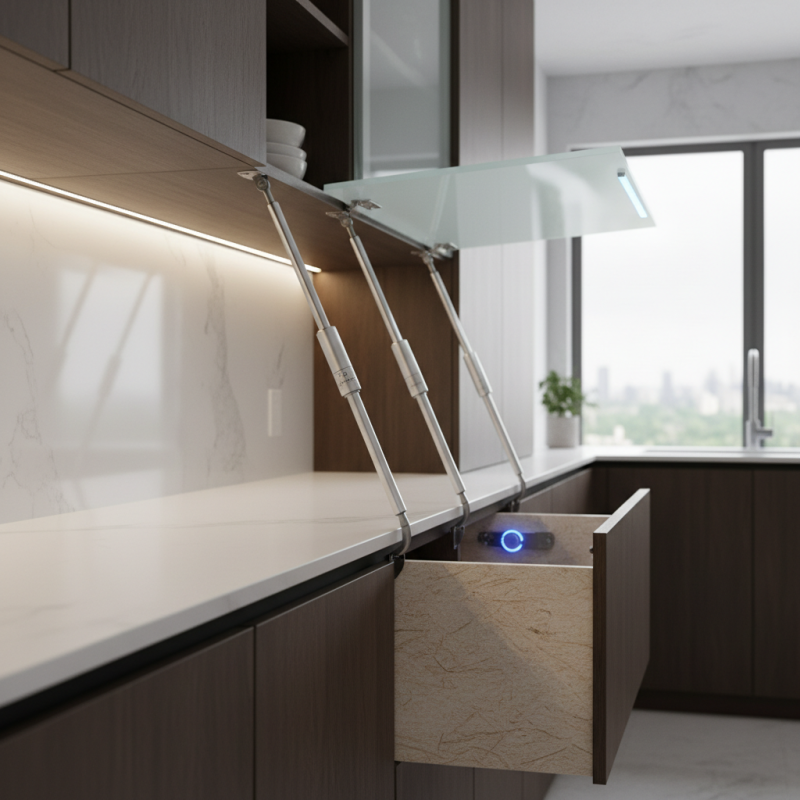
Cabinet door gas springs are evolving rapidly. Recent advancements reveal an emphasis on ease of use and durability. Manufacturers are focusing on optimizing materials. This leads to springs that can withstand frequent opening and closing. Users now benefit from smoother operations and enhanced functionality. Long-lasting performance is crucial for modern cabinetry.
Current trends indicate a shift toward adjustable gas springs. Flexibility in tension adjustment allows for personalized user experiences. It also caters to varying weights and sizes of cabinet doors. Designers are prioritizing aesthetics alongside functionality. Innovative designs are emerging that seamlessly integrate with the décor. However, not all products meet these standards. Some gas springs may fail under pressure, leading to frustrations.
Moreover, the technology behind gas springs is becoming more sophisticated. The push for energy efficiency is shaping future innovations. Sustainable materials are being used to lessen environmental impact. This presents a challenge for manufacturers who must balance performance and eco-friendliness. Continuous testing and improvement are essential to maintain reliability. Users desire dependable solutions that support their daily routines. As the industry evolves, ongoing reflection on quality will be vital.
Key Innovations Driving the Future of Cabinet Door Gas Springs
The cabinet door gas spring industry is witnessing a wave of innovations. Manufacturers are focusing on enhanced safety and ease of use. New technologies are driving improvements in gas spring mechanisms. These innovations aim for smoother operation and increased durability. Enhanced materials are being explored to ensure longevity and reliability over time.
One major advancement involves integrated damping systems. They allow for controlled movement, preventing slamming doors. This innovation benefits both users and manufacturers, as it reduces wear and tear. Improved designs also include customizable tension settings. Users can adjust the force needed for opening or closing cabinet doors. This personalization enhances user experience significantly.
Another intriguing trend is the development of smart gas springs. These systems can connect with home automation technologies. Users can operate cabinets through mobile devices seamlessly. However, incorporating technology raises questions about practicality and cost. Not every homeowner desires or needs such innovations. Balancing functionality with affordability is essential for future designs.
2026 Top Trends in Cabinet Door Gas Spring Innovations
Sustainability Trends in Gas Spring Manufacturing for Cabinets
As cabinet designs evolve, sustainability is becoming critical in gas spring manufacturing. Manufacturers are prioritizing eco-friendly materials. Recycled metals and biodegradable plastics are increasingly used. This shift reduces waste and lowers the environmental impact. However, these materials might not always meet performance standards. This creates a challenge for the industry.
The production processes are also adapting to new sustainability metrics. Companies are investing in energy-efficient machinery. This not only reduces carbon footprints but also cuts production costs. Yet, the initial investment is significant. Many manufacturers struggle to balance sustainability with profitability. This tension can lead to hesitation in adopting greener practices.
Regulations around environmental impact continue to intensify. Meeting these standards is crucial for companies. Innovation is often necessary, yet not all innovations prove sustainable in the long run. Continuous feedback from the market can help refine these developments. This approach helps balance innovative designs with practical sustainability, which is essential for the future of gas spring manufacturing in cabinets.
2026 Top Trends in Cabinet Door Gas Spring Innovations - Sustainability Trends in Gas Spring Manufacturing for Cabinets
| Trend |
Description |
Sustainability Impact |
Expected Adoption Rate (%) |
| Biodegradable Materials |
Developing gas springs made from biodegradable materials, reducing plastic waste. |
Positive, reduces landfill contribution. |
40% |
| Recyclable Components |
Increasing the number of recyclable parts in gas spring designs. |
Positive, promotes circular economy. |
55% |
| Energy-efficient Manufacturing |
Implementing energy-efficient processes during production. |
Significantly reduces carbon footprint. |
65% |
| Smart Gas Spring Technology |
Integrating sensors for monitoring and efficiency optimization. |
Indirectly enhances sustainability through optimization. |
30% |
| Local Sourcing |
Focusing on sourcing materials locally to reduce transportation emissions. |
Positive, decreases overall carbon emissions. |
50% |
Integrating Smart Technology with Cabinet Door Gas Springs
The integration of smart technology into cabinet door gas springs marks a significant shift in design and functionality. Recent industry reports project a 15% annual growth rate in this niche, reflecting rising consumer expectations for convenience and automation. Smart gas springs can now incorporate sensors, enabling automatic adjustments based on weight and user movements. This innovation not only enhances usability but also improves safety by preventing slamming doors.
As these intelligent systems evolve, they may face challenges. While these products offer advanced features, compatibility with existing cabinetry can be an issue. A lack of standardization often requires custom solutions. Consumers should carefully assess their current setups before making upgrades. Investing in high-quality gas springs with smart capabilities can yield long-term benefits, but ensuring a proper fit is crucial.
Tips: When choosing smart gas springs, consider their weight capacity. Not all springs handle heavy doors equally well. Regular maintenance is also essential. Check for wear and tear, as neglect can lead to failure. Lastly, understand that while technology brings ease, it also requires proper user knowledge for optimal performance.