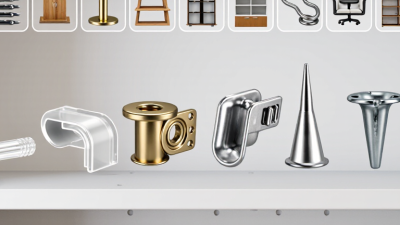
China’s role as a major furniture-hardware sourcing base makes supplier evaluation a practical concern. A Shelf Support Pin is small, but it carries shelf loads through a narrow contact point. A loose fit can leave a shelf wobbling; a poorly finished pin can scratch a cabinet hole. Small parts matter.
Grand View Research estimated the global furniture market at USD 677.09 billion in 2023. That figure describes furniture, not shelf pins, and should not be mistaken for pin-specific demand data. Still, it signals the scale of the market in which dependable cabinet fittings are used. Buyers comparing China-based manufacturers can look beyond price: check material specifications, dimensional tolerances, surface finish, sample consistency, and documented inspection practices. Ask how the pin fits common hole sizes, and test samples under the intended shelf load. Details count.
Quality-management expert Joseph M. Juran’s principle, “Quality is fitness for use,” offers a useful lens for evaluating this component. It is a general quality principle, not a Shelf Support Pin industry quotation. A supplier’s claims deserve verification against samples and records. That takes time. Public reports rarely isolate this small product category, so confident market-size claims about pins need careful scrutiny. For buyers seeking the China Best Shelf Support Pin Manufacturer and Supplier, reliable evidence starts with repeatable measurements, clear specifications, and candid answers when a product needs improvement.
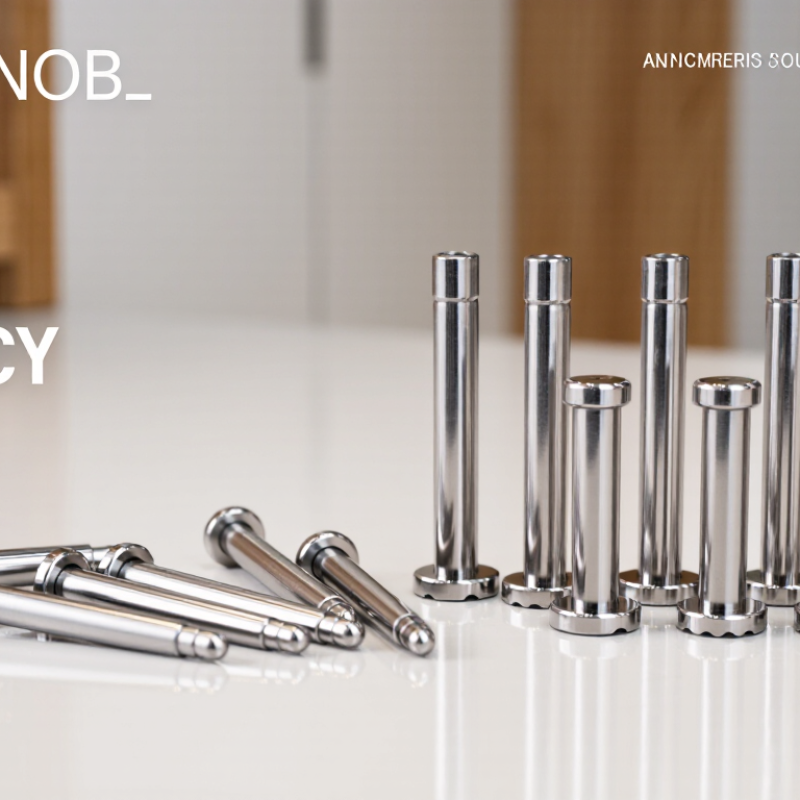
China Best Shelf Support Pin Manufacturer and Supplier
What Is a Shelf Support Pin and How Does It Work?
A shelf support pin is a small fitting that carries a removable shelf inside a cabinet or bookcase. Four pins usually sit in matching holes, one pair on each side. The shelf rests on their flat shoulders, transferring its weight into the cabinet panels. That sounds simple. It is not always. Loose holes, uneven pin heights, or a thin shelf can cause wobbling or sagging.
Pins may be made from steel, zinc alloy, or molded plastic. Some have a cylindrical body; others include a small locating ridge or locking feature. During installation, the pin’s stem fits into a drilled hole, while its shoulder supports the shelf edge. Hole diameter and pin length must match the cabinet system. Even a slight mismatch can make a pin hard to insert or leave the shelf unstable. Check that all four supports are level and fully seated before loading the shelf.
The market context is substantial: Grand View Research’s 2023 global furniture market report estimated the market at USD 677.09 billion in 2022. That figure describes the wider furniture sector, not shelf-pin sales or performance. For manufacturers and buyers, practical checks matter more: material consistency, dimensional accuracy, finish quality, and load testing in the intended panel material. A pin may look sturdy, yet chipboard can still fail around an oversized or poorly drilled hole. A useful specification should therefore state pin dimensions and the test conditions, rather than implying one universal load rating.
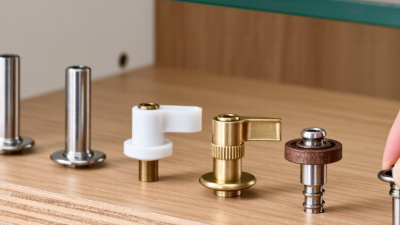
Shelf support pins look simple, but their shape affects fit and load stability. Straight pins suit drilled cabinet holes and removable shelves. Spoon-shaped supports cradle the board edge, while locking pins add a small catch to reduce accidental lifting. Glass shelves often use padded supports to protect edges from hard contact. Small parts matter. A pin can feel secure by hand yet shift under repeated loading.
Steel is widely used for its strength; zinc-plated steel adds a protective finish for ordinary indoor use. Stainless steel is a practical option where moisture is common, while zinc-alloy pins allow compact, shaped designs. Plastic pins are lightweight, but their suitability depends on shelf weight and temperature.
The World Steel Association’s World Steel in Figures 2025 reports 1,882.6 million tonnes of crude steel production worldwide in 2024. This indicates steel’s broad industrial availability, not shelf-pin market demand.
There is a catch: material alone cannot guarantee support. Hole diameter, pin length, panel quality, and installation all matter. Test the assembled shelf with its intended load; a sample board may behave differently from softer particleboard.
China Best Shelf Support Pin Manufacturer and Supplier
How Shelf Support Pins Are Manufactured and Tested
A reliable shelf support pin starts with the right material and a controlled process. Steel pins may be made by cutting, turning, or cold forming; zinc-alloy designs are commonly die-cast. The World Steel Association’s World Steel in Figures 2024 reports 1,882.6 million tonnes of crude steel production in 2023. That scale makes material traceability important, but volume alone cannot prove a pin’s quality. Check the material certificate.
After forming, pins are deburred, heat-treated when specified, and plated or coated for corrosion resistance. Inspect the shank diameter, head shape, and surface finish with calibrated gauges. A small burr can affect fit. So can a slightly oversized pin. These details matter when a pin must enter a pre-drilled cabinet hole without rocking.
Testing should match the intended load and finish. Measure dimensions, then apply a defined pull-out or load test using the customer’s requirements; there is no single safe load for every design. ISO 9227 describes salt-spray corrosion testing, while ISO 2859-1 covers acceptance sampling. Neither sets a universal pass threshold for shelf pins. That limitation deserves attention. Record test conditions, sample size, and results, rather than relying on appearance alone.
Typical manufacturing and quality-control overview. Material, dimensions, finishes, and acceptance limits should be specified on the product drawing or purchase specification.
| Manufacturing Stage | Typical Process or Equipment | Key Control Points | Inspection or Test | Acceptance Basis |
|---|---|---|---|---|
| Material selection | Steel, stainless steel, or another specified metal is selected according to the pin design and intended environment. | Confirm material grade, incoming condition, and supplier documentation. | Review material certificates and verify material identification where required. | Material matches the approved drawing or purchase specification. |
| Blank preparation | Wire or bar stock is cut to length; some designs use cold forming or heading to create the pin head. | Control cut length, blank condition, and forming setup. | Visual checks and dimensional checks with calipers or gauges. | Blank dimensions meet the drawing; parts are free from cracks and significant forming defects. |
| Shaping and machining | Turning, drilling, stamping, or other suitable operations create the shank, head, shoulder, or locating features. | Control shank diameter, overall length, head dimensions, and feature position. | Measure critical dimensions using micrometers, calipers, pins, or go/no-go gauges. | Dimensions and tolerances conform to the product drawing. |
| Deburring and edge finishing | Edges are deburred by tumbling, brushing, grinding, or a comparable finishing operation. | Remove loose burrs without changing functional dimensions. | Visual and tactile inspection; check mating or insertion features as applicable. | No harmful sharp edges, loose burrs, or defects that interfere with assembly. |
| Heat treatment, if specified | Selected steel pins may be heat-treated when the design requires particular mechanical properties. | Control the specified heat-treatment cycle and process traceability. | Hardness testing or other mechanical verification when required by the specification. | Results meet the specified material or drawing requirements; not every pin design requires heat treatment. |
| Surface treatment | Depending on the material and application, the pin may be plated, coated, passivated, or supplied with a natural finish. | Check finish coverage, appearance, and any specified coating thickness. | Visual inspection; coating-thickness or corrosion testing when required by the order. | Finish and test requirements match the approved specification. Corrosion performance depends on the selected material and finish. |
| Fit and insertion check | Representative pins are checked with the intended shelf-hole or mating-feature size. | Verify fit without excessive looseness, interference, or damage to the mating part. | Use a specified test fixture or representative mating component. | Fit is acceptable for the design and stated assembly requirements. |
| Load or proof test | A test fixture applies the specified load to the pin or assembled shelf-support system. | Use the defined loading direction, support arrangement, duration, and sample plan. | Record load and inspect for bending, fracture, or unacceptable permanent deformation. | Pass/fail limits must be set by the product design or customer specification; there is no single load rating for all shelf support pins. |
| Final inspection and packing | Finished parts are counted, checked, and packed to protect them from damage and contamination. | Confirm appearance, quantity, identification, and packaging condition. | Final visual inspection and quantity verification. | Product and packaging comply with the order requirements; inspection records are retained when specified. |
A reliable shelf pin supplier should prove dimensional consistency, not just offer a low unit price. Check pin diameter, insertion depth, head shape, and finish against your shelf holes. A pin that looks correct can still wobble or damage a panel if its tolerance is inconsistent. Small parts matter.
Ask for material specifications and test records. The supplier should explain how pins are checked for load, corrosion resistance, and finish defects. Request samples from more than one production batch, then test them in your actual boards. A neat sample alone proves little. This step takes time, but skipping it can cost more later.
The market context makes dependable sourcing important. Grand View Research estimated the global furniture market at USD 766.2 billion in 2024 and projected a 5.4% compound annual growth rate from 2025 to 2030 in its Furniture Market Size, Share & Trends Analysis Report. This broad market figure does not measure shelf pins specifically, but it signals sustained demand across furniture supply chains. Compare suppliers on batch traceability, packaging, lead times, and clear responses to technical questions. Ask how they handle rejected lots, too. I would not assume the first quotation tells the whole story. Check whether delivery promises match your production schedule.
China Best Shelf Support Pin Manufacturer and Supplier
Applications of Shelf Support Pins in Furniture and Cabinets
Shelf support pins make cabinet interiors easier to adjust without changing the cabinet structure. In kitchen cupboards, they hold shelves for plates, pantry jars, or small appliances. A homeowner can move a shelf higher when a tall bottle no longer fits. The pin should sit firmly in its drilled hole. No wobble.
In bookcases, pins allow shelf spacing to suit paperbacks, binders, or display pieces. Wardrobes use them for folded clothing and storage boxes, where shelf height may change with the season. Glass shelves need particular care: compatible pins with a broad, stable contact surface help reduce slipping. Small details matter. Pin diameter, hole size, and shelf thickness should match; a loose fit can let a shelf shift under uneven weight.
For furniture makers, consistent dimensions help pins fit repeated cabinet holes and simplify assembly. The right material and finish also depend on the environment and expected load. Check the cabinet design and product specifications rather than assuming every pin suits every shelf. Installation is simple, but overloaded shelves can still sag. That part is easy to overlook.
A common adjustable-shelf setup uses four support pins—two on each side. This arrangement is used in cabinets, bookcases, wardrobes, and bathroom vanities; the required number may vary with shelf design and load.