How to Choose a Concealed Door Hinge in 2026?
Choosing a Concealed Door Hinge in 2026 requires more than matching a finish to a door leaf. The hinge must carry weight, preserve alignment, support the opening angle, and survive repeated cycles. A beautifully hidden fitting can still fail when the frame is twisted or the door exceeds its tested load.
Market evidence supports careful selection. Grand View Research’s Door Hardware Market Size, Share & Trends Analysis Report identifies renovation, premium interiors, and architectural hardware as continuing demand drivers. Its findings suggest that buyers increasingly value clean visual lines without abandoning durability. MarketsandMarkets’ Smart Locks Market reports also highlight connected access and integrated door systems, although a hinge itself is not an access-control device. That distinction matters.
Fit comes first.
Professional installers usually check door mass, thickness, frame material, clearance, pivot geometry, and adjustment range. Product documentation should state load capacity, test cycles, corrosion resistance, and compatible standards. EN 1935 and ANSI/BHMA A156.1 provide useful reference points, but certification does not guarantee suitability for every installation. Site conditions still decide performance.
This guide compares concealed hinge types for timber, aluminum, steel, and interior architectural doors. It also examines three-dimensional adjustment, fire-door compatibility, maintenance access, and replacement difficulty. Some product claims sound stronger than the evidence available. Be cautious. A low-friction hinge may feel excellent during installation, yet poor fixing depth can cause sagging months later. The best choice balances tested performance, installer experience, manufacturer transparency, and the door’s real daily use—not merely its catalog appearance.
What Is a Concealed Door Hinge and How Does It Work?
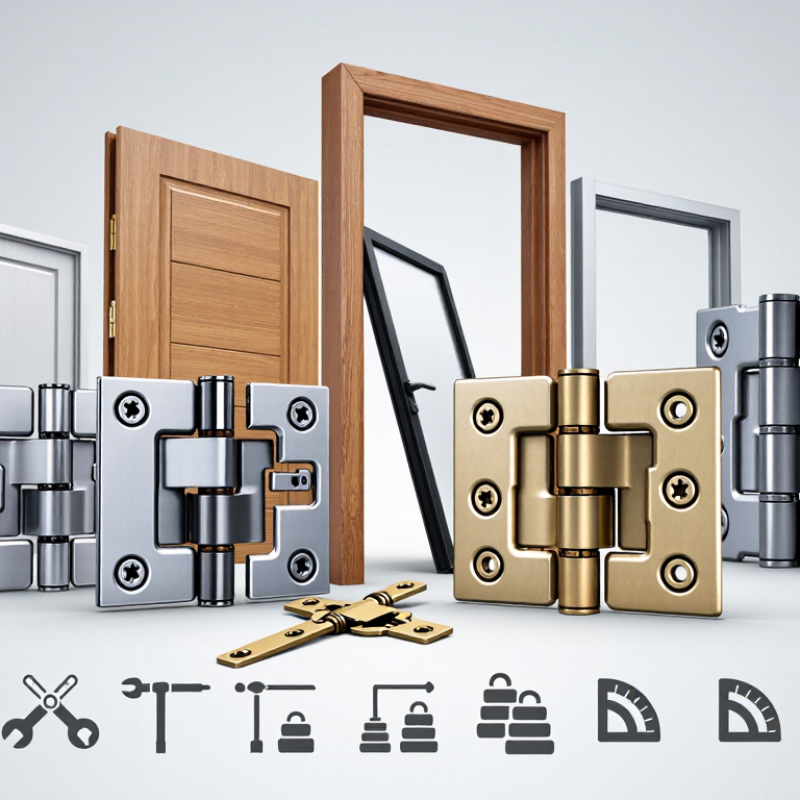
A concealed door hinge is a load-bearing mechanism hidden inside the door edge and frame. When the door closes, its moving parts disappear from view. The result is a clean, flush appearance without exposed hinge barrels.
Inside, two metal leaves connect through a central pivot or articulated arm. One leaf is recessed into the door, while the other sits inside the frame. As the door opens, the hinge arms rotate and guide the panel outward. When it closes, the arms fold back into their pockets. Precise mortising matters. A few millimeters of error can create rubbing, uneven gaps, or difficult closing.
Choosing one in 2026 requires more than checking appearance. Measure the door’s weight, thickness, height, and opening angle. Confirm the hinge’s tested load capacity, adjustment range, and number required per door. Three-dimensional adjustment can correct height, side gaps, and compression after installation. That feature saves time.
FRAME MATERIAL
Check the frame material too. A lightweight frame may need reinforcement around the hinge pocket. Doors with closers or unusual surface finishes can place extra stress on the mechanism. Ask for installation instructions and verified performance data. Do not rely on a vague “heavy-duty” label.
The smallest detail matters. Sometimes, a simpler hinge performs better than an overcomplicated model. My earlier assumption was that more adjustment always meant better performance. It does not. Poor alignment can defeat excellent hardware.
Which Door, Frame, and Weight Factors Should You Evaluate?
How to Choose a Concealed Door Hinge in 2026?
Which Door, Frame, and Weight Factors Should You Evaluate?
A concealed hinge must match the door, frame, and real operating load. Start with the door’s material, thickness, height, and opening frequency. A solid-core timber door feels very different from a lightweight hollow door. Glass, metal skins, closers, and automatic seals add hidden weight. EN 1935:2002 classifies hinge performance across door masses from 10 to 160 kilograms. Treat that range as a reference, not a shortcut. The full door assembly still needs checking.
Frame geometry matters just as much. Measure the rebate, stop depth, hinge-side clearance, and available routing depth. A narrow steel frame may not accept the same hinge body as a deep timber frame. Check the hinge’s adjustment range, fixing method, and required cavity size. Poor alignment can create rubbing at the latch edge. I have seen a door appear “too heavy” when the real problem was frame twist. That mistake is easy to repeat.
Tips: Weigh the complete door leaf, not only the slab. Add hardware and a safety margin. Review load ratings at the planned number of hinges and opening cycles. For high-use doors, consult ANSI/BHMA A156.1 or the applicable national standard. The Door and Hardware Institute recommends coordinated door-and-frame specifications, yet site conditions can still differ from drawings. Leave room for adjustment. Perfect calculations do not replace a careful test fit.
How to Choose a Concealed Door Hinge in 2026?
Recommended concealed hinge quantity by door weight for preliminary planning. Always verify the manufacturer’s certified load rating, adjustment range, and safety factor for the specific door system.
Evaluate door leaf weight, height, thickness, material, and frequency of use together. The frame must be rigid, accurately aligned, and deep enough for the hinge body. Heavier or taller doors, wide reveals, high traffic, glass panels, or soft-core construction may require additional hinges or a higher-rated system.
How Do Hinge Types, Materials, and Adjustments Compare?
Choosing a concealed door hinge starts with the door, not the catalogue. A light cabinet-style hinge suits a small interior panel, while a three-dimensional hinge handles heavier flush doors. Overlay hinges hide part of the door edge; rebated hinges fit stepped frames. Pivot hinges distribute weight differently and can simplify tall, narrow doors. Measure door mass, thickness, reveal, and opening angle before selecting hardware. I learned this after a small miscalculation left a 3-millimetre rub along the latch edge.
Materials change performance. Steel offers strength and predictable pricing, while stainless steel resists corrosion better in kitchens, bathrooms, and coastal buildings. Zinc alloy can provide clean machining, but its long-term load performance needs closer checking. The 2024 World Bank Commodity Markets Outlook reported continuing volatility in industrial metal prices, which can affect hardware costs and material substitutions. Ask for the actual alloy, coating thickness, and corrosion-test method, rather than trusting “premium” wording.
Adjustment matters after installation. Cam screws usually control height, depth, and side alignment, but their range varies significantly. Soft-close mechanisms improve user experience, although they add resistance and possible failure points. EN 1935 durability classifications reach 200,000 test cycles, providing a useful benchmark for frequently used doors. Yet laboratory cycles cannot reproduce warped timber, loose screws, or careless installation. Leave service access, use the recommended fasteners, and check alignment again after seasonal movement. Perfect on day one is not always perfect later.
How Can You Match Hinge Capacity to Door Size and Use?
Choosing a concealed door hinge in 2026 starts with the door’s real weight, not its appearance. Measure the slab, frame, glass, locks, closers, and decorative panels. Measure twice. A solid oak door may look ordinary but place heavy stress on the hinge knuckles.
Check the manufacturer’s capacity rating and its testing conditions. Some ratings apply to one hinge, while others assume a specific hinge quantity. Never multiply the rating blindly across three hinges. Door height, width, swing frequency, and installation accuracy change the load. A tall door creates more leverage, even when its weight seems acceptable. For frequent-use entrances, choose a working capacity at least 25% above the measured load. Real use matters.
A bedroom door and a busy corridor door need different specifications. A hinge for occasional residential use may not suit a door opening hundreds of times daily. Add extra allowance for a door closer, wind pressure, or a panel-mounted handle. I have seen installations fail early because the hinge capacity matched the door weight but ignored the closer. That mistake is easy to repeat. Check the adjustment range, fixing strength, and frame material as well. Thin metal frames may need reinforcement before installation. If the door sags, binds, or leaves uneven gaps, stop forcing the adjustment. The original calculation, or the installation, may be wrong.
What Installation and Maintenance Features Matter in 2026?
How to Choose a Concealed Door Hinge in 2026?
Installation and maintenance features now matter as much as appearance. A concealed hinge should match the door’s weight, thickness, and frame material. Check the tested load rating, not only the product photograph. A 3D-adjustable model allows vertical, horizontal, and depth alignment after installation. This helps when a timber door shifts slightly with seasonal humidity.
Measure carefully.
During installation, use the supplied template or create a rigid drilling guide. Small errors can leave the door rubbing against the frame. I recommend checking the hinge position with the door supported, rather than holding it by hand. Use suitable screws for the frame material, and tighten them evenly. Over-tightening can distort the hinge cup or damage soft wood. That mistake is easy to make.
Maintenance should be possible without removing the entire door. Look for accessible adjustment points, replaceable fasteners, protective covers, and finishes suited to the room’s humidity. In kitchens, bathrooms, and coastal areas, corrosion resistance deserves extra attention. Clean dust from the hinge area with a soft brush, then follow the maker’s guidance on lubrication. Some hinges need a light lubricant; others can collect grit when lubricated incorrectly. Inspect alignment every few months, especially after repainting. A quiet hinge is not always a healthy hinge. Slight looseness, uneven gaps, or a stiff closing motion may reveal early wear. Always confirm fire, accessibility, and installation requirements with applicable local standards.