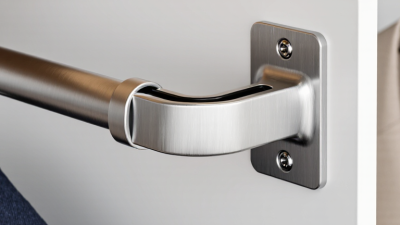
Global buyers rarely view a Closet Rod Bracket as a minor fitting. They assess load capacity, steel thickness, finish quality, hole alignment, and replacement consistency. A weak bracket can leave a wardrobe rod sagging above folded shirts, shoes, or winter coats. The failure is small. The cost is not.
Market evidence supports closer attention to storage hardware. The Freedonia Group identifies home organization products as a continuing demand area, supported by renovation and space-efficiency projects. The U.S. Census Bureau’s American Housing Survey also shows that housing conditions and storage layouts vary widely across households. Therefore, one bracket design cannot serve every project. Buyers need clear specifications, tested materials, and dependable production records.
Closet-design specialist Lisa Adams has stated, “Storage should support the way people actually live.” That principle matters during supplier evaluation. A commercial wardrobe may require reinforced steel and higher load ratings. A residential system may prioritize quiet installation, corrosion resistance, and a clean appearance. Some suppliers publish useful test information. Others provide only attractive photographs. That gap deserves scrutiny.
This guide reviews the Top 10 Closet Rod Bracket Suppliers for Global Buyers. It considers manufacturing experience, material options, quality control, customization, packaging, minimum order quantities, and communication. Supplier rankings are never perfect. Factory audits, sample testing, and independent verification still matter.
The goal is practical comparison. Not advertising.
Sources include Freedonia Group research, the U.S. Census Bureau’s American Housing Survey, and professional closet-design commentary from Lisa Adams.
Top 10 Closet Rod Bracket Suppliers for Global Buyers
What Closet Rod Brackets Are and Why They Matter
A closet rod bracket is the small fitting that holds a hanging rod in position. It transfers clothing weight into a wall, side panel, or vertical partition. The part may look simple. Its failure is not.
A reliable bracket needs correct geometry, adequate screw depth, and a verified load rating. For example, a 1.2-meter rod can sag when dense coats gather at its center. Stud-mounted screws usually provide stronger support than drywall anchors alone. However, wall structure varies by country and building type. A supplier should provide installation drawings, material specifications, corrosion information, and test conditions.
The demand is practical, not decorative. Harvard University’s Joint Center for Housing Studies projected U.S. homeowner remodeling expenditure to reach about 485 billion dollars by the end of 2024. Storage upgrades remain part of this broader renovation activity. Grand View Research also identifies home-organization products as a continuing growth category, supported by smaller homes and better space use.
Details matter.
Buyers should compare steel thickness, hole spacing, rod diameter compatibility, and surface coating. Load claims require caution. Some ratings describe evenly distributed weight, not one heavy garment cluster. That distinction is easy to miss. Even experienced purchasers sometimes compare prices before checking wall conditions. That approach needs reconsideration. A low-cost bracket can become expensive after sagging, stripped screws, or repeated replacement.
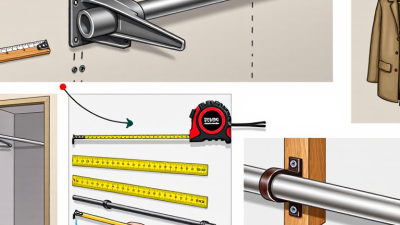
Closet rod brackets support the rod, transfer clothing loads to the wall or cabinet, and help prevent sagging. The most common residential rod diameters are approximately 25, 28, 32, and 35 mm; bracket selection should match the rod diameter, mounting surface, and expected load.
Top 10 Closet Rod Bracket Suppliers for Global Buyers
For a Top 10 shortlist, global buyers should assess more than catalog photos and low quotations. Key criteria include material control, load performance, production consistency, documentation, and delivery resilience. A practical audit should review steel or aluminum grades, tube wall thickness, weld quality, coating adhesion, and dimensional tolerances. Request test records, then repeat key checks on samples from a pilot order. A polished report can still hide weak batch control. Look closer.
The ISO Survey reports over one million ISO 9001 certificates worldwide. This supports confidence in documented processes, but certification does not prove a bracket’s safe working load. Ask for product-specific testing, traceable inspection records, and clear working-load limits. Samples should face realistic conditions, including repeated loading, corrosion exposure, and imperfect wall alignment. Supplier responses to nonconformities also reveal engineering maturity. Delayed answers are useful evidence, too.
The World Bank’s 2023 Logistics Performance Index assessed 139 economies through customs, infrastructure, tracking, and timeliness. Buyers should compare these factors with supplier lead times, export experience, packaging design, and backup production capacity. UNCTAD reports that over 80% of global trade by volume moves by sea, so port dependence can affect replenishment schedules. Confirm carton strength, pallet dimensions, labeling, and moisture protection before placing volume orders. No scorecard is perfect. Price still matters, but the cheapest bracket may create higher installation and replacement costs.
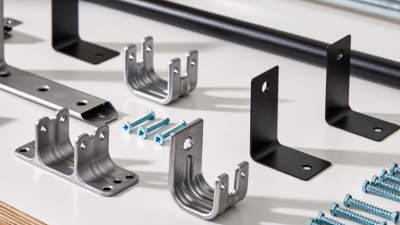
The top 10 closet rod bracket suppliers stand out through different product strengths, not identical catalogs. Some focus on heavy-duty steel brackets for coats, uniforms, and storage rooms. Others produce compact zinc-alloy supports for smaller wardrobes. Their best models often include reinforced screw holes, smooth edges, and tested load ratings. These details matter when a rod carries winter clothing every day.
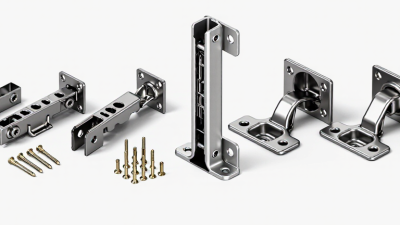
Several suppliers specialize in adjustable brackets. Their sliding designs fit uneven cabinet widths and simplify installation. Others offer concealed supports that create a clean, furniture-grade appearance. Corrosion-resistant coatings are valuable in humid bedrooms, laundry areas, and coastal homes. A few suppliers prioritize custom finishes, such as matte black, brushed nickel, or warm brass. Consistent color matching can be more difficult than product photos suggest.
From practical installation checks, bracket depth and screw quality affect stability as much as metal thickness. A strong bracket can still fail on weak drywall. Reliable suppliers therefore provide mounting guidance, compatible fasteners, and clear packaging labels. Bulk buyers may prefer suppliers with repeatable dimensions, carton protection, and inspection records. I have found that adjustable products save time, but they may feel less rigid under uneven loads. That trade-off deserves testing. A useful evaluation should compare load performance, finish durability, installation speed, packaging, and replacement support rather than relying on appearance alone.
| Rank | Supplier Profile | Primary Product Strength | Typical Material | Typical Load Capacity | Adjustment Options | Mounting Compatibility | Common Surface Finish | Best-Fit Application | Buyer Priority |
|---|---|---|---|---|---|---|---|---|---|
| 1 | Profile A | Heavy-duty wall-to-wall closet rod brackets designed for higher garment loads | Steel or zinc alloy | Up to 50 kg per pair* | Fixed or screw-adjusted rod depth | Wood studs, masonry, and cabinet panels | Powder coating or electroplating | Walk-in closets, wardrobes, and commercial storage | Load Strength |
| 2 | Profile B | Adjustable side-support brackets for different closet widths | Up to 35 kg per pair* | Telescopic or slotted adjustment | Side panels and vertical partition boards | Nickel, chrome, or matte black plating | Modular wardrobes and retrofit projects | Flexibility | |
| 3 | Profile C | Minimalist concealed brackets focused on clean interior appearance | Up to 25 kg per pair* | Limited adjustment; concealed fasteners | Cabinet sides and reinforced panels | Anodized aluminum or powder coating | Premium residential and contemporary interiors | Design | |
| 4 | Profile D | Commercial-grade brackets for repeated installation and daily use | Up to 45 kg per pair* | Fixed mounting with multiple screw holes | Stud walls, commercial fixtures, and shelving systems | Durable powder coating | Hotels, apartments, retail fit-outs, and contractors | Durability | |
| 5 | Profile E | Compact brackets optimized for small closets and limited-depth cabinets | Up to 20 kg per pair* | Short-depth and low-profile options | Cabinet panels and narrow side walls | Satin nickel or white coating | Entry-level wardrobes, utility rooms, and apartments | Space Saving | |
| 6 | Profile F | Multi-function brackets combining rod support with shelf support | Up to 30 kg per pair* | Shelf height and rod position options | Vertical rails, side panels, and wall tracks | Powder coating or anodized finish | Open wardrobe systems and laundry storage | Versatility | |
| 7 | Profile G | Corrosion-resistant brackets for humid or coastal environments | Up to 30 kg per pair* | Fixed or slotted adjustment | Masonry, treated timber, and moisture-resistant panels | Brushed stainless steel or protective coating | Bathrooms, coastal homes, laundry areas, and marine facilities | Corrosion Resistance | |
| 8 | Profile H | Tool-friendly brackets supplied with standardized fixing accessories | Up to 25 kg per pair* | Pre-drilled holes and alignment slots | Drywall with anchors, timber, and cabinet boards | White, black, chrome, or nickel plating | DIY retail, maintenance programs, and replacement orders | Easy Installation | |
| 9 | Profile I | Customizable brackets supporting private-label dimensions and finishes | Project-dependent; commonly 20–45 kg per pair* | Custom hole patterns, depth, and geometry | Specified according to project drawings | Custom powder coating, plating, or anodizing | OEM programs, fitted furniture, and contract manufacturing | Customization | |
| 10 | Profile J | Cost-efficient standard brackets for high-volume replacement and retail supply | Up to 25 kg per pair* | Standard fixed-hole configuration | Common timber, cabinet, and drywall applications | Basic powder coating or electroplating | Mass-market furniture, replacement parts, and hardware kits | Value |
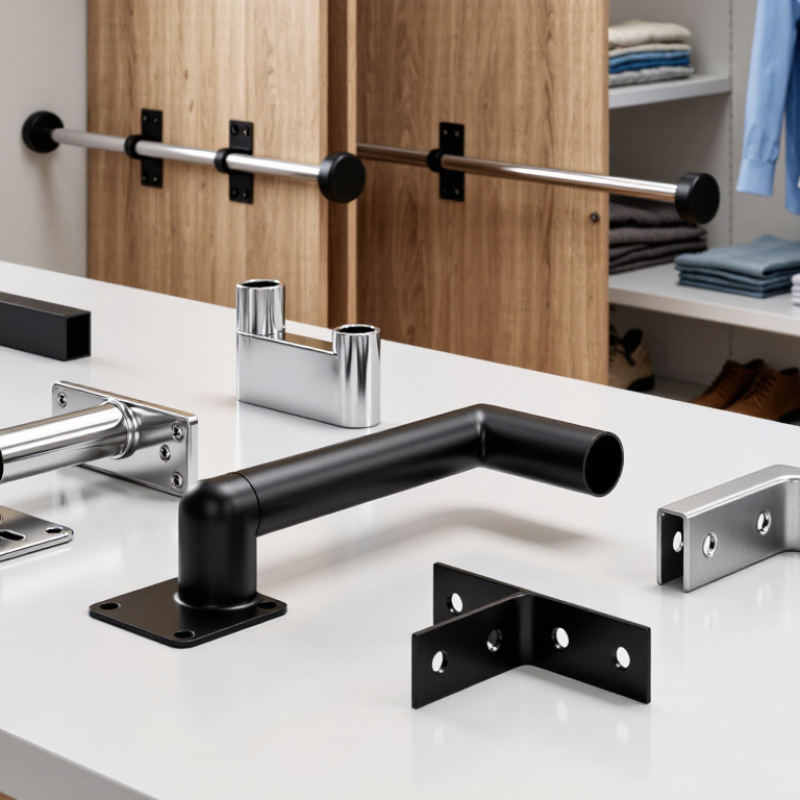
When comparing closet rod bracket suppliers, material choice reveals practical experience. Steel brackets suit heavy garments and repeated daily use. Zinc alloy offers detailed shapes and a smoother decorative finish. Aluminum reduces weight, but it may require careful load testing. Ask for coating thickness, salt-spray results, and corrosion performance in humid rooms. Small details matter, such as screw alignment, rounded edges, and stable wall contact.
Designs should match different installation conditions. Adjustable brackets help projects with changing rod widths. Concealed designs create a cleaner appearance, while reinforced plates support commercial wardrobes. Reliable suppliers should provide clear drawings, sample approvals, and consistent dimensions. Certifications such as ISO 9001 may indicate controlled production, but certificates need verification. Test reports should identify standards, laboratories, and tested products. A certificate alone proves little. Customization can include color, hole spacing, packaging, logos, and special mounting plates. However, custom tooling may increase lead time and minimum order quantities.
Tips: Request samples before placing bulk orders. Test brackets with real rods, screws, and clothing weight. Confirm packaging strength for long-distance shipping. Ask how defects are recorded and replaced. Some suppliers promise everything. Their follow-up quality may differ. Keep written specifications, because memory is unreliable.
Choosing among the top ten closet rod bracket suppliers requires more than comparing catalog prices. Global buyers should match each supplier’s materials, production capacity, and quality controls with the project’s actual needs. Check steel thickness, mounting-hole spacing, surface finish, and stated load capacity. Ask for drawings and a physical sample.
Test the sample with a practical load. A bracket holding folded shirts may not support heavy coats. Inspect screw holes, welds, edges, and coating consistency under bright light. Request batch inspection records, material information, and packaging photographs. Reliable suppliers explain defects openly. Vague answers deserve caution.
Purchasing also depends on trade details. Confirm minimum order quantity, sample fees, production lead time, carton dimensions, and replacement terms. Clarify delivery responsibilities and export documents before payment. A written specification prevents costly misunderstandings. Small details matter.
Communication is evidence.
In my sourcing experience, fast replies are helpful but not enough. A polished catalog can still hide unstable production. Buyers should compare two samples from different batches when possible. This step costs time, yet it reveals variation that one sample may miss. Price should be reviewed with freight, inspection, damage risk, and after-sales support included. The cheapest quote is sometimes the expensive choice. Suppliers that accept reasonable audits, provide consistent records, and discuss corrective action usually offer stronger long-term value. Still, no supplier is perfect, so buyers should document assumptions and review them before placing a larger order.