Choosing the right Glass Clamp is a small decision with serious structural consequences. Global buyers must consider glass thickness, edge treatment, installation angle, load direction, and environmental exposure. A clamp that performs well in a dry interior may corrode quickly beside a coastal walkway. That difference matters.
Glass consultant Mark Meshulam has emphasized, “Glass is not a forgiving material.” His warning remains practical for purchasing teams. A clamp can look precise while hiding weak threads, poor polishing, or uncertain material grades. This guide examines popular options for 2026, including 90-degree clamps, 180-degree clamps, adjustable clamps, round clamps, square clamps, and wall-mounted designs. It also considers stainless steel, brass, and coated finishes.
Details often decide performance. A 304 stainless steel clamp may suit many indoor projects. Marine or chemical environments may require 316 stainless steel. The glass thickness must match the clamp specification exactly. Do not rely only on photographs. Product names and dimensions vary between suppliers, regions, and industries. That can create avoidable confusion.
Real projects are rarely perfect.
Buyers should request technical drawings, material certificates, load information, surface-finish details, and installation instructions. They should also verify whether the design supports tempered or laminated glass. Local building requirements still need review by qualified professionals. No catalog can replace site-specific engineering.
The strongest choice is not always the cheapest clamp. It is the one that fits the glass, environment, and installation method without forcing risky adjustments. This overview aims to make that choice clearer, although some specifications still deserve closer questioning.
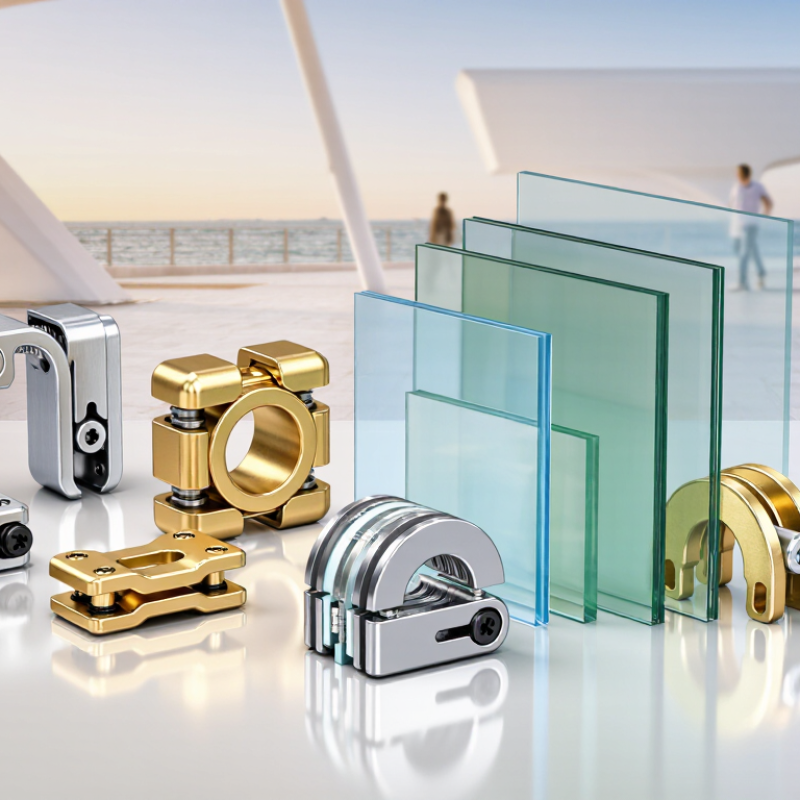
Glass clamps are compact fittings that hold glass panels against posts, walls, floors, or frames. They usually use a metal body, rubber liners, and tightening screws. The liner matters. It cushions the glass and reduces point pressure. In a balustrade, clamps keep panels aligned while allowing the supporting structure to carry loads. They do not replace sound engineering. A beautiful clamp cannot correct a weak substrate, uneven drilling, or unsuitable glass thickness. That distinction is often missed.
Global buyers commonly compare square, round, adjustable, edge, and 90-degree corner clamps. Square clamps suit clean architectural lines, while round clamps soften visual details. Adjustable models help when site conditions vary slightly. Edge clamps grip along a panel edge and can reduce visible hardware. Corner clamps join two panels without a bulky post. Selection should follow the panel thickness, glass type, load direction, environment, and installation method. Stainless steel may resist corrosion well, but finish and grade still require careful checking.
From installation reviews, the most frequent problem is over-tightening. It can damage glass quietly. A torque-controlled method and correctly sized liner improve consistency. Installers should inspect the glass edge, confirm fastener engagement, and keep metal from touching glass directly. I have also seen drawings assume perfectly square walls; real sites rarely cooperate. That assumption needs revision. Buyers should request load data, dimensional tolerances, test evidence, and maintenance guidance from suppliers. Product photos are useful, but they prove very little.
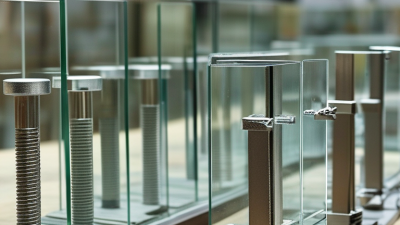
Global construction projects commonly use four glass clamp types.
The load path matters. The 2024 UNEP Global Status Report for Buildings and Construction states that buildings consume about 32% of global energy and produce 34% of global carbon emissions. This supports wider use of daylighting and transparent envelopes. However, clamps must match the glass assembly, not just its appearance. Tempered, laminated, and insulated glass need different edge clearances and fixing details. A clamp can look robust but fail through uneven tightening. Small parts matter.
Global Construction Perspectives and Oxford Economics forecast construction output to reach about 15.5 trillion dollars by 2030. That scale increases demand for repeatable hardware selection. Buyers should verify glass thickness, design loads, corrosion exposure, drainage, and compatibility with standards such as EN 12150 or ASTM C1048. Site tolerances also deserve attention. Real projects are rarely perfect, so adjustable fittings and documented torque procedures can prevent costly rework.
Glass clamps are no longer simple fixing pieces. Global buyers now compare stainless steel, aluminum, brass, and reinforced alloys for strength, weight, and maintenance. Stainless steel remains practical for wet interiors and coastal projects. Aluminum reduces handling weight, but its surface can scratch more easily. Brass adds visual warmth, although it needs stricter finish control.
Finish selection changes both appearance and service life. Brushed surfaces hide fingerprints, while mirror polishing creates a sharper architectural effect. Powder coating offers more color choices, but damaged edges may expose the base metal. The International Energy Agency’s Buildings 2023 report states that buildings used about 30% of global final energy in 2022. Durable hardware supports longer replacement cycles, even if this benefit is often overlooked. The Circularity Gap Report 2024 measured global circularity at only 7.2%. That figure encourages buyers to ask about repairability, recycled content, and replaceable pads.
Tips: Match the clamp to glass thickness, load direction, and edge distance. Use EPDM or silicone liners to reduce stress and prevent direct metal contact. Check salt-spray or corrosion-test data, not only showroom samples. I have seen attractive clamps fail because drainage was ignored. Small details matter. Design features such as concealed screws, adjustable jaws, rounded edges, and anti-slip inserts improve installation quality. Still, “premium” does not always mean safer. A qualified engineer should verify loads, especially for guardrails, doors, and large panels.
How to Choose the Right Glass Clamp for Each Application
Glass clamp selection starts with the panel, not the appearance. Square clamps suit clean balustrade lines and rigid, flat connections. Round clamps work better around curved edges or tubular supports. Adjustable clamps help installers correct minor alignment errors on uneven floors. That flexibility is useful, but it can hide poor measurements.
For outdoor railings, choose corrosion-resistant stainless steel and replaceable elastomer pads. The pad should grip the glass without creating sharp pressure points. Never clamp tempered glass after cutting or drilling. Its edges must be processed before tempering. Laminated glass may offer better retention after breakage, but its interlayer and thickness require engineering review. Check glass weight, wind pressure, span, edge distance, and the supporting substrate together. A strong clamp cannot repair weak concrete.
The International Energy Agency reports that buildings consume about 30% of global final energy and create roughly 26% of energy-related emissions. This keeps transparent, efficient building systems under close scrutiny. Grand View Research also identifies construction as a leading application for flat glass in its market analysis. These reports describe broad glass demand, not clamp performance. That distinction matters. On one project, a visually neat clamp spacing looked adequate, yet the substrate failed inspection. The lesson was uncomfortable: aesthetics cannot replace load calculations. For wet areas, inspect drainage gaps and hidden corrosion points. For interior partitions, prioritize clean edges, controlled tolerances, and safe failure behavior. Always request tested load data, installation torque limits, and compatibility information before approving a clamp.
| Clamp type | Typical applications | Common glass thickness | Typical materials | Glass support | Main advantages | Key limitations | Best selection criteria |
|---|---|---|---|---|---|---|---|
| Square glass clamp | Balustrades, shower screens, partitions, display cases and interior guard panels | Usually 6–12 mm; some heavy-duty versions accept thicker glass | 304 stainless steel for indoor use; 316 stainless steel for damp or coastal environments; zinc alloy for light-duty interiors | Point-fixed edge or face support, depending on the model | Clean geometric appearance, broad availability and easy alignment with straight edges | Visible corners can be less suitable where a softer architectural appearance is required | Choose by glass thickness, load direction, hole requirements and corrosion exposure |
| Round glass clamp | Curved partitions, shower enclosures, decorative screens and furniture | Commonly 6–10 mm; verify the clamp insert and adjustment range | Stainless steel, brass or zinc alloy with protective surface finishes | Edge or surface-mounted support using pressure plates and protective gaskets | Rounded profile reduces sharp visual lines and suits curved or decorative designs | May offer less usable clamping area than some rectangular designs | Select the correct radius, gasket material, finish and allowable glass movement |
| 90-degree glass clamp | Glass-to-glass corners in shower enclosures, room dividers and display structures | Typically 6–10 mm, depending on the corner configuration | 304 or 316 stainless steel; plated metal may be used for decorative indoor installations | Connects two panels at a nominal right angle | Creates a stable, frameless corner without a full metal frame | Requires accurate panel dimensions, edge protection and correct corner clearance | Confirm the angle tolerance, panel overlap, gasket thickness and installation sequence |
| 180-degree glass clamp | Straight-line glass partitions, shower panels and inline screens | Generally 6–12 mm | Stainless steel or brass; stainless steel is preferred in wet areas | Joins two glass panels in the same plane | Maintains a continuous linear layout while minimizing framing | Not intended for perpendicular corners or high-angle transitions | Check panel alignment, joint width, glass edge condition and structural support |
| Wall-to-glass clamp | Shower screens, glass walls, office partitions and fixed side panels | Commonly 6–12 mm | 304 stainless steel indoors; 316 stainless steel for high-humidity or marine-adjacent locations | Transfers load from the glass edge or face to a wall substrate | Useful for fixed panels and helps create a frameless appearance | Wall strength, anchors and waterproofing details directly affect performance | Match the clamp to substrate type, anchor capacity, glass load and wet-area sealing needs |
| Glass-to-floor clamp | Fixed shower panels, low partitions, retail displays and floor-mounted screens | Often 8–12 mm; heavy-duty systems may allow thicker panels | 316 stainless steel or other corrosion-resistant structural metal | Provides a base connection, usually with additional top or side restraint where required | Reduces the need for a continuous floor channel and simplifies cleaning access | Floor flatness, waterproofing and anchoring are critical; it may not be sufficient as the only restraint for tall panels | Review height-to-width ratio, floor construction, deflection limits and required secondary supports |
| Glass spigot clamp | Pool fencing, balconies, terraces, stair balustrades and outdoor guardrails | Usually 10–13.52 mm laminated or toughened glass, subject to the engineered system | 316 stainless steel is commonly specified outdoors; marine-grade finishes may be required in severe exposure | Supports the glass at the base through a post-like fitting | Provides a low-visual-impact alternative to continuous frames or posts | Guarding applications require engineering review, correct glass composition and code compliance | Verify local guardrail loads, wind exposure, fixing depth, drainage and laminated-glass requirements |
| Glass shelf clamp | Bathroom shelves, retail shelving, cabinets, signage and light display units | Commonly 6–10 mm, depending on shelf depth and load | Stainless steel, brass, aluminum or zinc alloy | Supports a horizontal glass shelf from a wall, frame or vertical panel | Compact, adjustable and suitable for small architectural or merchandising installations | Load capacity is strongly affected by shelf projection, clamp spacing and substrate strength | Calculate the working load, shelf depth, support spacing and anti-slip gasket requirements |
| Glass-to-glass adjustable clamp | Modular partitions, changing-room screens, shower systems and temporary display structures | Usually 6–12 mm within the specified adjustment range | Stainless steel or anodized aluminum with elastomeric gaskets | Connects panels while allowing limited angle or position adjustment | Helps accommodate site tolerances and simplifies field alignment | Adjustment range is limited and should not be used to correct major fabrication errors | Confirm the adjustment angle, fastener accessibility, gasket compatibility and final load path |
Global Standards, Safety Factors, and Installation Requirements
Glass clamps are not interchangeable parts. Their shape, material, and fixing method must match the glass system, building use, and local rules. Common options include round clamps for balustrades, square clamps for partitions, and heavy-duty clamps for stair screens. Stainless steel is widely selected for corrosion resistance, especially near coastlines. However, grade selection still matters. Outdoor projects may require stronger resistance than indoor installations.
Global buyers should request test reports, material certificates, and load calculations before ordering. Glass should comply with relevant standards, such as EN 12150 for thermally toughened glass or ASTM C1048 where applicable. Laminated glass may follow different requirements. These references do not replace local engineering approval. Safety factors must consider impact, wind, crowd loads, glass thickness, and fixing strength. A clamp can look solid and still be wrong.
Installation quality often decides real performance. The substrate must be sound, level, and free from loose concrete. Installers should check edge distances, use suitable anchors, and tighten bolts with a calibrated torque tool. Neoprene or approved isolation pads can prevent metal-to-glass contact. Never drill or cut toughened glass on site. Small alignment errors matter. Field inspections often find uneven torque, damaged gaskets, or clamps fitted too close to an edge. These issues are easy to overlook, and installation manuals should clearly state tolerances, inspection steps, and maintenance intervals.