Cabinet doors should lift smoothly, stay open, and close without a jolt. That small motion depends on choosing the right Gas Spring Cabinet Support. Door weight, panel width, hinge position, and opening angle all affect performance. A support that feels strong in a showroom may struggle once fitted to a wide, heavy door. Details matter.
Market context helps explain why these components deserve careful selection. Fortune Business Insights valued the global furniture market at approximately $677 billion in 2023 and projected continued growth through 2032. This broad market figure is not a gas-spring sales measure. Still, it reflects the scale of furniture design and manufacturing, where dependable hardware affects daily use. Product specifications and real-world fit remain more useful than market size alone.
The following guide compares seven cabinet support options by lifting force, installation needs, durability, and value. It also considers practical details, such as whether a support suits an upward-opening kitchen door or a storage bench lid. Look for clear force ratings, corrosion-resistant finishes, and accessible replacement parts. Check the manufacturer’s load guidance before installation. A rating is not a guarantee. Door geometry can change the result, and some listings provide surprisingly little test information. That deserves scrutiny.
What Are the 7 Best Gas Spring Cabinet Supports?
Gas Spring Cabinet Supports: Purpose and Operating Principles
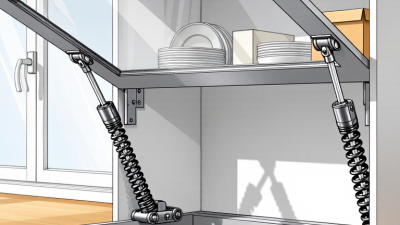
Gas spring cabinet supports hold doors, lids, and upward-opening panels in a controlled position. They reduce lifting effort and limit sudden drops. Inside the cylinder, compressed nitrogen pushes against a piston and rod. The basic relationship is simple: force approximately equals pressure multiplied by piston area.
A small orifice controls gas movement between chambers. This creates smoother opening and closing. The support’s force rating must match the door’s weight, center of gravity, and mounting angle. A 400-newton support does not always provide 400 newtons at the handle. Leverage changes everything. In practical installations, I measure the door and test its movement before final drilling. Guessing is a costly habit.
Industry data also supports careful selection. Grand View Research estimated the global gas spring market at about USD 3.2 billion in 2023, with continued growth through 2030. MarketsandMarkets has reported that industrial automation and vehicle applications remain major demand areas. These figures reflect broader engineering use, not cabinet performance alone. Still, they show why reliable force control matters.
Choose supports with corrosion-resistant rods, sealed cylinders, and secure ball-stud fittings. Install them symmetrically when possible. Check for binding, side loading, and incomplete opening. A common mistake is selecting force only by door weight. That method is imperfect. Temperature, friction, and mounting geometry can change the result. Small details matter.
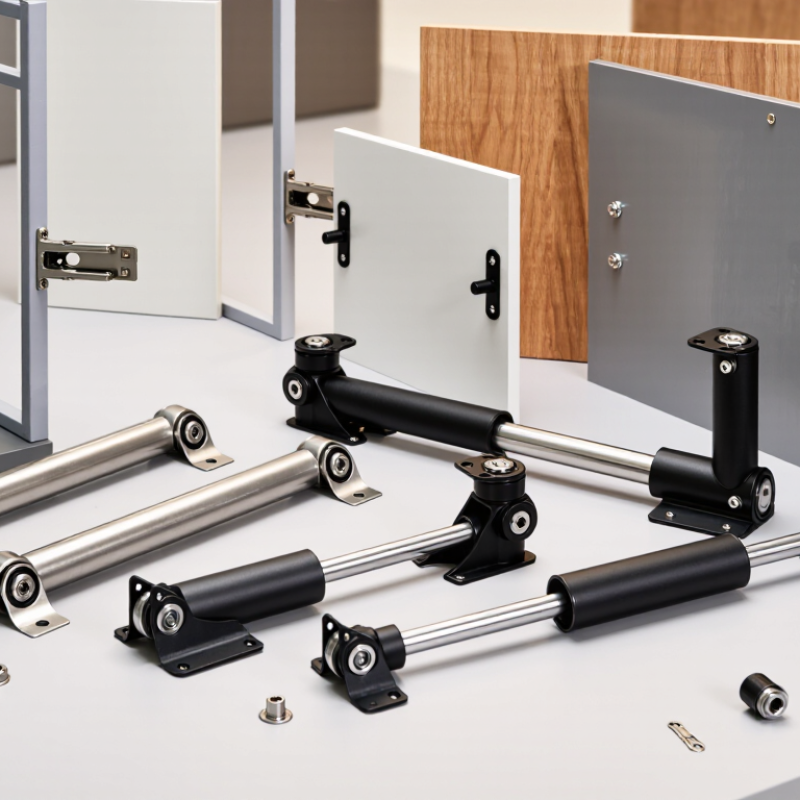
Cabinet gas springs differ by motion, damping, and load capacity. Basic lift-up supports hold a door open; friction stays allow adjustable positioning. Soft-close models add damping near closure, while locking supports hold a panel at a chosen angle. Each type suits a different door weight and opening path. Check the rated force in newtons, stroke length, and mounting dimensions before installation. A force rating alone can mislead: hinge position and door geometry also affect lifting effort.
The market context is broad, not cabinet-specific. Grand View Research estimated the global furniture market at USD 736.2 billion in 2023, reflecting a large sector where fittings support everyday usability. That figure does not measure gas-spring demand, but it helps explain why compact, reliable cabinet hardware matters. For paired supports, check whether the rating applies to each spring or to the pair. A mismatch can leave a wide door sagging or make it snap upward.
Tips: Measure the panel and mark mounting points before drilling. Test the motion with the cabinet unloaded, then adjust carefully. Do not assume stronger is better; excessive lift force can strain hinges and make closing awkward.
Evaluating the seven best cabinet gas spring supports requires more than checking lifting force. The seven practical criteria are load capacity, stroke length, compressed length, mounting angle, cycle life, corrosion resistance, and locking safety. A support should hold the door smoothly, without sudden rebound or visible twisting. Check the door’s weight and center of gravity, not only its panel size. Small errors matter.
The Gas Spring Market report by MarketsandMarkets estimates steady global growth through 2029, driven partly by demand for controlled movement and safer access systems. However, market growth does not prove product quality. Ask for force-tolerance data, fatigue-test results, and temperature ratings. ISO 9001-style production controls can improve consistency, but certification alone cannot confirm correct cabinet performance. Test the support at the real installation angle. It may behave differently.
Safety deserves close attention. The U.S. Bureau of Labor Statistics reported 2.6 million nonfatal workplace injuries and illnesses in private industry during 2023. Cabinet supports are not the main cause, but uncontrolled doors can create pinch and impact hazards. Select corrosion-resistant materials for kitchens, workshops, and humid storage rooms. Inspect ball studs, brackets, and seals after repeated use. I would also leave a small safety margin above the calculated load. Too much force can make a door difficult to close. Too little force invites slamming. Test both conditions.
| Rank | Support Type | Best Application | Typical Force Range | Typical Stroke | Typical Extended Length | Recommended Panel Load* | Rod and Cylinder Material | Mounting Style | Key Advantage | Evaluation Rating |
|---|---|---|---|---|---|---|---|---|---|---|
| 1 | Adjustable Heavy-Duty Gas Spring | Large overhead cabinet doors, storage lids, and tool compartments | 180–250 N | 150–250 mm | 350–550 mm | 12–22 kg | Steel cylinder; chrome-plated steel rod | Ball-stud or side-bracket mounting | High lifting capacity with force adjustment for different door weights | ★★★★★ |
| 2 | Soft-Closing Cabinet Gas Spring | Kitchen, bathroom, and furniture doors requiring controlled closing | 60–150 N | 60–150 mm | 180–350 mm | 4–12 kg | Painted steel cylinder; hardened steel rod | Compact side brackets | Reduces slamming and provides smoother final movement | ★★★★★ |
| 3 | Stainless-Steel Gas Spring | Marine cabinets, outdoor storage, kitchens, and humid environments | 80–200 N | 80–200 mm | 220–450 mm | 6–18 kg | Stainless-steel cylinder and rod | Eyelet, ball-stud, or bracket mounting | Improved resistance to moisture and surface corrosion | ★★★★☆ |
| 4 | Compact Lift-Assist Gas Spring | Small wall cabinets, compact lids, and limited installation spaces | 40–100 N | 40–100 mm | 120–240 mm | 2–8 kg | Coated steel cylinder; plated steel rod | Mini ball-stud or compact side bracket | Small overall footprint with reliable assistance for light panels | ★★★★☆ |
| 5 | Lockable Gas Spring Support | Service panels, equipment cabinets, and doors that must remain open | 100–250 N | 100–250 mm | 280–550 mm | 8–22 kg | Steel cylinder; chrome-plated rod | Clevis, eyelet, or ball-stud mounting | Mechanical locking function improves access and maintenance safety | ★★★★☆ |
| 6 | Low-Temperature Gas Spring | Cold rooms, refrigerated cabinets, and unheated storage areas | 80–180 N | 80–200 mm | 220–450 mm | 6–16 kg | Coated steel cylinder; corrosion-resistant rod | Ball-stud or eyelet mounting | Designed to maintain more consistent performance in cold conditions | ★★★★☆ |
| 7 | Twin-Support Gas Spring Set | Wide or heavy doors where balanced lifting is required | 60–150 N per spring | 80–200 mm | 220–450 mm | 10–24 kg per pair | Steel cylinder; plated steel rod | Paired side brackets or ball studs | Distributes load evenly and reduces twisting on wide cabinet doors | ★★★★☆ |
Evaluation basis: Ratings consider lifting capacity, motion control, corrosion resistance, installation flexibility, space requirements, and suitability for common cabinet applications. Actual load capacity depends on door weight, center of gravity, mounting angle, hinge position, and whether one or two supports are installed. Gas spring force is specified in newtons (N).
The seven best gas spring cabinet supports suit different lid sizes, opening angles, and load conditions. Common choices include single side-mounted supports, paired supports, upward-opening lid supports, soft-closing units, locking models, compact low-force springs, and heavy-duty springs. Grand View Research’s 2024 Gas Spring Market Size report valued the global market at about USD 3.4 billion in 2023. This growth reflects wider demand for controlled lifting and safer movement, including furniture applications.
Measure the cabinet lid before installation. Record its weight, width, hinge position, and opening angle. Install two supports when the lid is wide or heavy. Position each bracket evenly, usually 80–120 millimeters from the side edge. Keep both brackets parallel. Misalignment creates twisting and uneven wear. Use screws suited to the cabinet material, and avoid over-tightening them. That mistake is common.
Test the lid slowly by hand. It should rise smoothly, without dropping or springing upward. If it feels weak, check the mounting angle before replacing the spring. A small angle change can significantly alter lifting force. Adjust one side at a time, then compare both sides. ISO 11901-1 provides relevant guidance for gas spring performance and force classification. After installation, inspect fasteners after 20–30 cycles, then again after several weeks. Field experience suggests that real cabinets rarely behave perfectly; temperature, warped panels, and changing loads can affect results. Safety comes before convenience.
Gas spring cabinet supports need regular care, especially on heavy lids used every day. Wipe dust and grease from the rod with a soft, dry cloth. Do not sand, puncture, or disassemble the pressurized cylinder. Check mounting brackets for loose screws, cracked wood, or bending around the hinge area.
A lid that drops suddenly is a serious warning.
Test the cabinet slowly. Open the lid halfway, release it carefully, and watch for uneven movement, unusual noise, or weak support. I once trusted a smooth-looking support that had already lost pressure. That was a mistake. A visual check can miss internal wear, so repeated slipping deserves attention. Keep fingers clear of pinch points during every test. Support the lid with a prop before removing any support.
Tips:
Measure the extended and compressed lengths before ordering replacements. Confirm the force rating, stroke length, rod direction, and end fittings. Replace damaged supports in matched pairs when the cabinet uses two identical units. Install them in the same orientation as the originals. Never force a fitting onto a bracket. If the lid remains unstable after replacement, stop using the cabinet and inspect the frame, hinges, and mounting screws. Small alignment errors can overload a new support. It is tempting to choose a stronger unit, but excessive force may damage the cabinet or make opening unsafe.